
This is the fifth and final blog in our “LLIRN About Us” series, which Laura Smith-Khan and I commenced in 2024 in celebration of 5 years of the Law and Linguistics Interdisciplinary Research Network (LLIRN). The series is all about sharing the wide-ranging research and professional work of LLIRN’s 260+ members, so far in relation to language and criminal justice research; multilingualism in courts; language and inclusion in law; and education and training.
Today, our focus is not on what but who: we’re delighted to spotlight some of the newest members of the network. This post introduces recent advocacy, academic and community-building efforts from a leading barrister, a linguistics professor and a leading forensic linguist, a legal academic, a postdoctoral researcher, three postgraduate research students and our new LLIRN Intern.
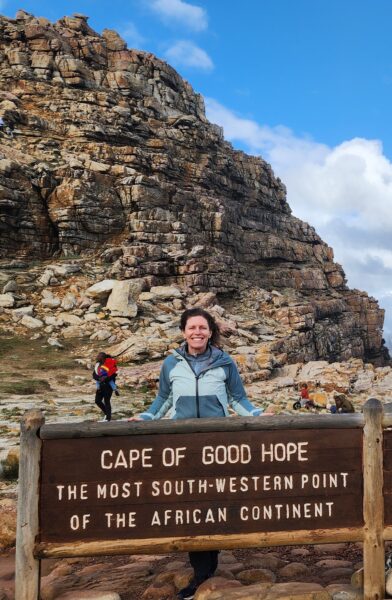
Eleanor Kettle at the Cape of Good Hope after the 2025 IAFLL conference in Cape Town (Image credit: Eleanor Kettle)
And to keep sharing news from researchers, professionals, policy-makers and students concerned with problems arising when language issues and legal issues meet, we also have a new website to announce: www.lawandlanguage.org! We’re continuing to add to it. It houses this and other blogs from LLIRN members; teaching and research resources; and profiles of people and projects. Come visit!
Professor Gratien G. Atindogbé
Gratien G. Atindogbé, a Professor of African Languages and Linguistics at the University of Buea, Cameroon, has been a significant figure in the field since 1997. His academic journey includes a doctorate in African linguistics from the University of Bayreuth, Germany, in 1996. His research interests are diverse, covering descriptive linguistics, documentation of endangered languages, historical linguistics, tonology, Cameroonian Pidgin English, intercultural communication, forensic linguistics, and the sociolinguistics of French. Notably, he is a key member of the Pluridisciplinary Advances in African Multilingualism project, funded by the National Science Foundation in the US. His dedication to Higher Education management is evident, and he has authored nearly fifty publications, including articles, collective chapters, and scientific books.
Recent publications
Atindogbe, Gratien G. (2022). Digital Humanities for Sustainable Learning: Lessons from Documentary Linguistics. OASIS Commonwealth of Learning’s (COL) Open Access Repository. DOI https://doi.org/10.56059/pcf10.5128
Atindogbé, Gratien G. and Dissake, Koumassol Endurence M. (2019). Forensic Linguistics as a tool for the development of Cameroon national languages. African Study Monographs 40(1): 23- 44. https://doi.org/10.14989/243208
Dissake, Koumassol Endurence M. and Atindogbé, Gratien G. (2020). Analyzing Court Discourse in a Multilingual Setting: The Case of the Buea Court of First Instance. In Pier Paolo Di Carlo and Jeff Good (Eds.), African Multilingualisms. Lanham: Lexington Books.
Dr Edward Clay
Dr Edward Clay is currently a Research Fellow working in the Law School at the University of Birmingham, UK. His research interests focus on empirical and interdisciplinary approaches to law and language, examining the intersection between translation, law, terminology and linguistics. His research examines the effects of translation on terminology in legal discourse, and legal translation as a language contact scenario.
His PhD (2024) was an interdisciplinary project at the interface of law and language, translation, migration studies and linguistics, leading to a thesis entitled ‘Translation-induced language change in the field of migration: a multilingual corpus analysis of EU legal texts and press articles.’ This project examines the potential for migration terminology to emerge across different languages through translation in an institutional setting before becoming more widely established in general discourse. He is currently working on a research project funded by the Leverhulme Trust entitled ‘The Impact of Brexit: A Linguistic Perspective’ to investigate the changes in EU legal language since the UK’s withdrawal from the EU and the implications of any changes for the policy and lawmaking environment of the EU and the UK.
Recent publications
Clay, E (2024), Language contact within an institutional ecosystem: The impact of EU translation. in M Dasca & R Cerarols (eds), Translation Studies and Ecology: Mapping the Possibilities of a New Emerging Field. 1st edn, Routledge Advances in Translation and Interpreting Studies, Routledge, pp. 40-56.
Clay, E (2022), A Corpus-Based Approach to Examining Terminological Variation in EU Law, International Journal of Language & Law, vol. 11, pp. 142-162. https://doi.org/10.14762/jll.2022.142
Clay, E & McAuliffe, K (2021), Reconceptualising the Third Space of legal translation: a study of the Court of Justice of the European Union, Comparative Legilinguistics, vol. 45, no. 1, pp. 93-126. https://doi.org/10.2478/cl-2021-0005
Allegra Holmes à Court
Allegra Holmes à Court is a fifth-year undergraduate student at the Australian National University, where she is completing a Law/Arts double degree with a major in linguistics. She is currently contributing to an Indigenous language revitalisation project, conducting linguistic analysis of archival records to support community initiatives. She is interested in the intersection of law and linguistics, particularly in the consequences of language ideologies within legal contexts—an area she has written about for Language on the Move. She is currently working as the inaugural LLIRN intern.
Eleanor Kettle
Eleanor Kettle is a PhD student and a Research Assistant with the Research Hub for Language in Forensic Evidence at the University of Melbourne, Australia. Her PhD research area is the forensic transcription of audio featuring non-mainstream varieties of English (NMVE), exploring who should be transcribing these types of audio, and how contextual information may assist in reliable transcription. The aim of this research is to develop evidence-based processes for the reliable transcription of poor-quality forensic audio featuring NMVE, to ensure that only demonstrably reliable transcripts are provided as assistance to the court. In addition, as her specific focus is on NMVE, Eleanor is keen to explore how to represent non-mainstream (or even ‘non-standard’) language features in transcripts while minimising the potential for bias and discrimination of NMVE speakers in the criminal justice system.
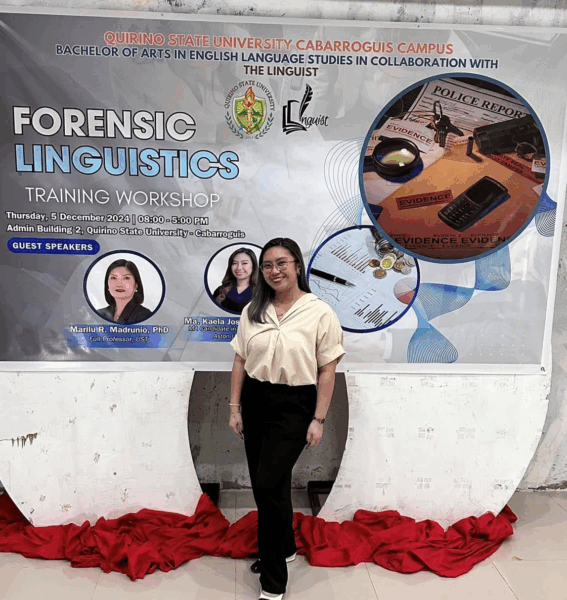
Kaela Madrunio, a guest speaker at the 2024 Forensic Linguistic Training Workshop at Quirino State University, The Philippines (Image credit: Kaela Madrunio)
Eleanor has previously worked as a teacher for adult English language learners in Australia and Italy, and as a curriculum and materials developer for basic English literacy materials in eSwatini, as well as developing teaching materials for use in ESL/EFL classrooms.
Recent presentations
Kettle, E., & Fraser, H. (2024a). Evaluating Transcripts of Poor-Quality Forensic Audio: Sine-Wave Speech and Forensic Audio. Proceedings of the Nineteenth Australasian International Conference on Speech Science and Technology, 242-246. https://assta.org/sst-2024/proceedings
Kettle, E., & Fraser, H. (2024b, 26-29 November). “Feel sorry for your ears”: Exploring challenges in transcribing speech with unknown content in unfamiliar varieties ALS Conference, ANU, Canberra. https://als.asn.au/Conference/2024/Program2024
Kettle, E., & Fraser, H. (2025, 30 June – 4 July). “We speak in broken English and a mix of languages”: Listener familiarity as a factor affecting the reliable transcription of non-mainstream varieties of English IAFLL Biennial Conference, University of the Western Cape, South Africa. https://iafll.org/2025/06/25/17th-biennial-conference-of-iafll-final-programme/
Kaela Madrunio
Ma. Kaela Joselle R. Madrunio is a faculty member of the Faculty of Languages and Literature at Philippine Normal University, Manila. She earned her Master’s degree in Forensic Linguistics from Aston University, UK, making her the first Filipino to hold a degree in this field. With this achievement, she embraces both the honor and responsibility of raising awareness of forensic linguistics in the Philippines and contributing to its development as an academic and applied discipline.
Kaela is currently working on a research project that examines migrant narratives through the lens of forensic linguistics, focusing on how migrants use language to frame their experiences and construct their past and present identities. She is also developing a separate paper that analyzes deception in migrant narratives as reflected in Philippine Senate hearings. In addition, she is working on a special issue on multilingualism in Philippine courtrooms, focusing on its implications for justice and legal understanding.
Kaela’s other research interests include plagiarism detection, deceptive language, the role of Philippine English in forensic linguistics, and forensic phonetics, with a particular focus on transcription. Passionate about bridging theory and practice, she currently serves as the Secretary of the Philippine Association for Forensic and Legal Linguistics (PAFLL) and is an Associate Member of the National Research Council of the Philippines (NRCP).
Recent publications
Madrunio, M. K. J. R., & Lintao, R. B. (2023). Power, Control, and Resistance in Philippine and American Police Interview Discourse. International Journal for the Semiotics of Law-Revue internationale de Sémiotique juridique, 37(2), 449-484. https://doi.org/10.1007/s11196-023-10045-8
Madrunio, M. K. J. R., & Madrunio, M. R. (2022). Language in Crisis Negotiations: The Rizal Park Hostage-Taking Incident. 3L: Southeast Asian Journal of English Language Studies, 28(3).
Dr Joe McIntyre
Joe McIntyre is a judicial studies scholar at University of South Australia. What does this mean? Well, basically, he studies all things related to judges and courts – including legal theory orientated work on the nature and function of judges, judicial accountability and impartiality, doctrinal work (particularly in constitutional and administrative law), empirical work (including in JusticeTech, civil justice, and accountability) as well as a range of comparative and interdisciplinary research on all things judicial.
In the last five years, this has led him to the very weird but incredibly interesting world of ‘pseudolaw’ where adherents utilise the forms of law, but not its substance, to advance their case in litigation. Think the sovereign citizen litigant (who was probably waving a red ensign at an anti-vax protest in 2021) arguing that they are not a legal entity and the court has no jurisdiction because the wrong coat of arms is displayed. Last year, he and colleagues undertook a world-first project interviewing judges and administrators whose work is being profoundly affected by pseudolaw. Given the central role language plays in the performance of pseudolaw, Joe has included two applied linguists on the project team, who helped the team understand the communicative expertise of adherents (look out for their upcoming article in the Alternative Law Journal). And now suddenly Joe feels himself falling down the law and linguistics rabbit hole…
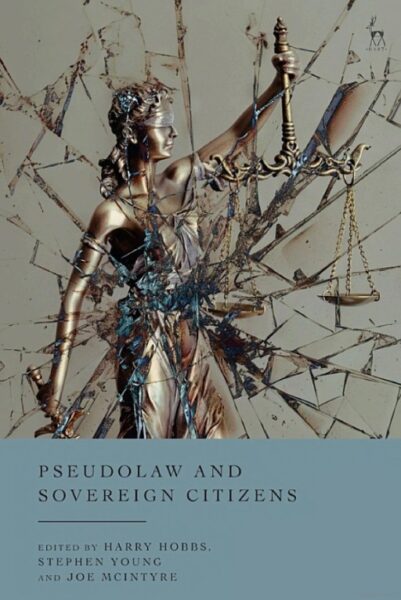 His most recent work in this area “Pareidolic Illusions of Meaning: ChatGPT, Pseudolaw and the Triumph of Form over Substance” explores the connections between pseudolaw and GenAI. In doing so it traverses territory of linguistics, psychology and computer science – and has a lot of fun along the way. Joe is still very new in this law and linguistics space but having fun – but please let him know new things to read or explore.
Recent publications
Hobbs, H., Young, S., & McIntyre, J. (Eds.). (2025). Pseudolaw and Sovereign Citizens. Bloomsbury Publishing. https://doi.org/10.5040/9781509978946.
McIntyre, J. (2025). Pareidolic Illusions of Meaning: ChatGPT, Pseudolaw and the Triumph of Form over Substance. SSRN eLibrary. http://dx.doi.org/10.2139/ssrn.5181165
Alice Richardson
Alice Richarson is a Doctoral Researcher in the Department of Language and Linguistic Science, University of York, UK. Alice’s PhD by publication examines the role of interpreters in the UK asylum process through three interconnected studies that move from stakeholder perceptions to real-world practice to legal outcomes. Paper 1 uses thematic analysis of interviews with 30 practitioners to reveal that while interpreters and legal professionals favour a ‘conduit’ role emphasising neutrality, this ideal is complicated by practical demands for cultural mediation, role misunderstandings, and the emotional toll of asylum work. Paper 2 employs Hymes’ ethnography of communication framework to analyse privileged observational data from real Home Office asylum interviews, demonstrating how interpreters navigate complex communicative demands in high-stakes institutional settings where prescribed neutrality often conflicts with actual practice. Paper 3 provides empirical evidence of interpreters’ impact on asylum appeal outcomes through mixed-methods analysis of asylum decision notices, showing that interpreting issues range from procedural to critical impacts, with serious errors sometimes forming the central basis for appeals and cases involving substantial interpreting problems being less likely to result in successful outcomes. Together, these papers demonstrate that interpreters can make or break asylum cases and highlight the need for institutional recognition of interpreters’ crucial role in ensuring fair access to justice, particularly given ongoing concerns about service quality following the 2011 outsourcing of court interpreting services.
Momee Tariq
Momee Tariq is a Higher Degree Research Candidate in the School of Law at the University of New England, Australia. Momee is undertaking an MPhil in Law under the supervision of Dr Laura Smith-Khan. Her experience of going through administrative appeal for herself and two dependent children with regards to citizenship made her think about legal literacy for migrant women in terms of self-representation without having any legal backup.
As a result, her research revolves around identifying barriers for migrant women self-litigants in Australia and enhancing legal education to contribute towards a gender-responsive migration system. Momee’s literature review so far suggests that in accessing migration-specific legal information, women face barriers from both internal and external factors. Internally, they may lack legal knowledge in terms of who to get in touch with in accessing relevant information and how to proceed within the prescribed timeframes, difficulty in understanding legal language in the forms and proceedings, financial issues and shame and stigma owing to their cultural background or migration status. Externally, they may be regarded as a burden on the judicial system due to their rising numbers and being a source of extra workload for staff amounting to prejudice and discrimination, the increasing demand for support services that community legal centres provide when they are already strapped financially, issues in translating and interpreting, the use of automated decision-making in government agencies, lack of definitive data regarding self-litigants, and the potential of Alternative Dispute Resolution in supporting migrant women navigate a legal system that is foreign to them. Her research methodology involves desktop research identifying community legal and settlement services and involving them in a survey questionnaire on what migration-specific issues their clients may have experienced. Since there are a limited number of community legal services dedicated to migration support, identifying migrant women’s information needs is essential in providing tailored solutions. This approach will help uncover information seeking practices among migrants and how advances such as AI and creativity can be harnessed towards promoting legal literacy.
Ifé Thompson
Ifé Thompson (pronounced Ee-feh-ee) is a Black Language Researcher, criminal defence barrister at Nexus Chambers, and community organiser leading pioneering work on Black language justice in the UK legal system. Her legal practice challenges how Black British English (BBE), African American Vernacular English (AAVE), and rap or drill lyrics are misrepresented in court as evidence of criminality rather than being recognised as cultural and linguistic rights.
 She has transformed defence strategies by centring linguistic expertise and racial justice. In R v LZ (2024), she defended a Black child prosecuted for using AAVE, and in R v L (2022), she successfully challenged the misinterpretation of Jamaican Patois by a non-expert witness. In the widely publicised March 2025 “N-word trial,” she secured the withdrawal of charges against a Black woman accused of obscene communication for using the N-word, arguing that intra-community use of the term must be understood within its cultural and historical context.
Thompson also critiques the weaponisation of hate crime and communications laws against racialised communities, where intra-community language and political critique are increasingly criminalised. In R v X (2023), she defended a client prosecuted for calling a prospective MP a “coon,” asserting the protection of Black political speech under human rights law.
She is the founder of Black Learning Achievement and Mental Health (BLAM UK), which defends BBE in education and has written teacher plenaries and worksheets on Black Languages. Her forthcoming book, Black British English (Palgrave Macmillan, 2025), looks at the history of this contemporary language, the influence of creolised languages and ways we can fashion spaces of linguistic joy and esteem for Black British English speakers.
She is also deeply engaged in language justice via using digital platforms to amplify conversations around Black British linguistic identity. Ife can be found on TikTok (@ifedior), where she shares content as a Black linguistic creator and explores the intersections of race, language, and power.
Podcast
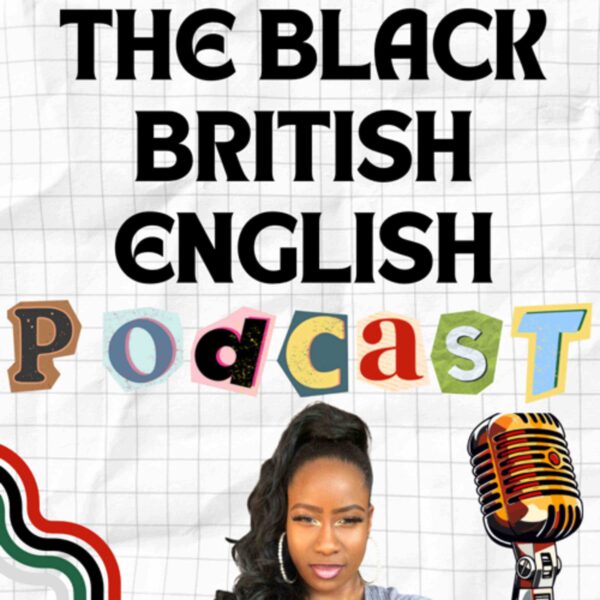
The Black British English Podcast
What about you?
Do you work or do research in an area where language and law intersect? Join the LLIRN and visit our new website! We run online and in-person events and maintain a lively and growing mailing list, now with members from at least 43 different countries, at diverse stages of their careers, including students, academics, language and legal professionals, and those in policy and decision-making roles.


 This work is licensed under a