
Human voice – between sound and identity
I have always been fascinated by the human voice. When you speak on the phone with a stranger, it can reveal so much about them. You can often tell whether it’s a man or a woman, estimate their age, and sense their attitudes and emotional state — whether they sound polite, distant, nervous, happy, or sad.
And, importantly, you can almost immediately recognize whether the person speaking has a foreign accent or not. Pronunciation is never just about sounds: it reflects the social meanings attached to language.
A different kind of accent training
In my phonetics and phonology classes, I usually deal with a familiar scenario: students ask me how they can improve their pronunciation in their L2 Italian or L2 Spanish and sound more “natural”. How to avoid a foreign accent — or at least minimize it.
Of course, there is nothing wrong with having a foreign accent. It simply shows that you grew up speaking another language. But many students want to refine their pronunciation, and I am a happy companion on that journey.
This time, however, it was different. A friend asked me to do a favor for one of her friends — an actress. In her new movie production, she had to play a German woman speaking Spanish with a strong German accent.
She told me: “Well, I know I have to do the German R sound, which is very different from Spanish. But I feel there’s more.”
Exactly. There are even native Spanish speakers who have difficulty pronouncing the rolled R — this phenomenon has a name: «rhotacism» or «the French R» (la erre francesa). But even speakers who don’t “roll” the R can still sound perfectly native-like.
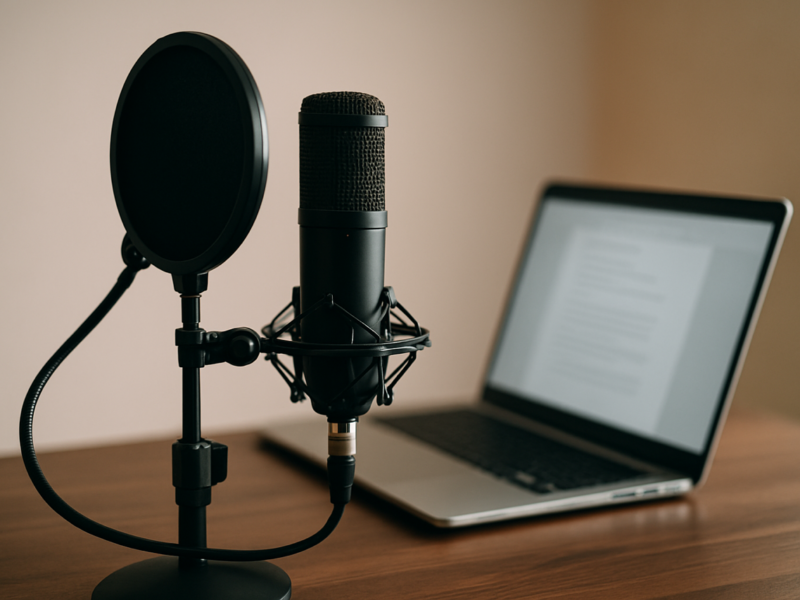
(Image credit: Andrea Pešková)
So, what is it all about?
What makes Spanish sound German
Let’s take a closer look at some of the most distinctive features of “German” Spanish.
German speakers don’t only struggle with R sounds. One of the most noticeable characteristics is the aspiration of the voiceless stops /p t k/: pala ‘shovel’ may sound like [ˈphala], tono ‘tone’ like [ˈthono], and cosa ‘thing’ like [ˈkhosa]. The aspiration should remain subtle and light — otherwise it may begin to sound more “English” than “German”.
Another typical feature is that the final [o] may sound overly close, almost like [u], turning perro ‘dog’ or loco ‘crazy’ into perru or locu in Spanish ears.
German speakers also tend to pronounce the Spanish approximants [β ð ɣ] between vowels as full stops, so la bodega ‘the wine cellar’ [laβoˈðeɣa] becomes something like [laboˈdeɡa] rather than the softer Spanish version.
They also often insert a glottal stop before vowel-initial syllables or words. El auto ‘the car’ becomes [elˈʔawto], and otra ‘other’ turns into [ˈʔotɾa]. This gives Spanish a slightly “choppy”, segmented rhythm.
Orthographic influence plays its role too. Speakers may pronounce the normally silent h, voice the s between vowels as z (casa ‘house’ [ˈkaza]), or mispronounce <eu> as [ɔɪ̯] instead of [ew]. And the infinitive ending -er may shift towards something like -a in the word comer [komˈea] ‘to eat’.
Prosody contributes as well. Stressed open syllables may sound unusually long, unstressed vowels may be reduced, stress placement may shift, and intonation patterns often diverge. For example, the end of neutral statements may sound exaggeratedly emphasized, lacking the subtle falling contour typical of Spanish.
Making the accent sound real
We worked on all these phonetic features, and my student did an excellent job. We wanted the accent to sound authentic and recognizable, but never exaggerated or comical.
While we focused mainly on pronunciation, I also pointed out that in real-life speech, grammatical transfer phenomena often accompany a foreign accent. In many movies, accented speech is portrayed with perfect grammar but an overdone pronunciation, which feels unnatural.
In reality, small deviations are common in second-language speech — for instance, occasional omission of articles (Me gusta pizza ‘I like pizza’ instead of Me gusta la pizza ‘I like the pizza’), overuse of subject pronouns that are usually dropped in Spanish, or transfer of verbal tense and aspect.
These subtle grammatical influences, combined with pronunciation, shape the overall impression of an accent and make speech sound more believable.
From correction to creation
What we both found most fascinating in this experience was the shift in perspective: instead of trying to eliminate a foreign accent, we tried to recreate one. It was a playful reminder that accents are not errors but expressions of our identity, multilingual experience and authenticity.
We often see how accent becomes a marker of belonging — or of difference.
But when we learn to listen closely, every accent tells a fascinating story about who we are, where we come from, and the paths our languages have taken.
Additional resources
If you want to explore more accents in Spanish, visit this page that my students in Osnabrück (Germany) created: https://andrea-peskova.com/archivo-de-los-acentos-l2/. There you will find examples of Czech, Italian, Slovak, Greek, and American English accents in Spanish.




 This work is licensed under a
Thanks for sharing this fascinating discussion! As a previous Spanish learner and current German learner, it was really interesting and a lot of the features you mention make sense.
When we take the time to observe these logical patterns and develop the habit of listening to different ways of speaking, it perhaps helps to overcome one of the claimed “problems” of accents – that they make people’s speech hard to understand. We can train ourselves to become better listeners 😊
Thank you very much for the comment, Laura! I appreciate it a lot and love your idea about “becoming better listeners”. I speak indirectly about this here: https://www.languageonthemove.com/native-listening-and-learning-new-sounds/ 🙂