
In this episode of the Language on the Move podcast Dr Hanna Torsh talks to Katharina Gensch (University of Hamburg) about her new paper “English language education for older adults in a multilingual urban environment,” which has just been published in Educational Gerontology.
Abstract. This paper explores how older adults in the German capital of Berlin react to the perceived increase of English as a commonly used language in their urban environment. Drawing from an interview study with participants of English classes for older adults, the article identifies different attitudes expressed in reaction to linguistic changes in their environment. These attitudes include embracing the concept of an international city and linguistic diversity, framing anglicization as an integral – yet not necessarily well-liked – part of certain neighborhoods, and rejecting it as a discriminatory, ageist practice. Furthermore, the interviewees were found to employ English learning and use as a versatile strategy to participate more fully in their environment’s communicative practices. Due to global dynamics, older adults living in multilingual cities can be expected to become an ever more relevant population group. Research on the language practices of older adults in multilingual environments often focuses on the perspective of migrants’ language acquisition and practices. The article argues that, against the background of globalization, educational gerontology will need to focus more on foreign language acquisition – including research on older migrants, but also on older adults who do live in countries where their first language is the official one, but nevertheless make use of an additional language in order to fully participate in their daily surroundings’ communicative practices.
If you liked this episode, support us by subscribing to the Language on the Move Podcast on your podcast app of choice, leaving a 5-star review, and recommending the Language on the Move Podcast and our partner the New Books Network to your students, colleagues, and friends.
References
Gensch, K. (2025). English language education for older adults in a multilingual urban environment. Educational Gerontology, 1-14. https://doi.org/10.1080/03601277.2025.2569380
Zemba, S., & Mehrotra, M. (2023). “What’s your accent, where are you from?”: Language and belonging among older immigrants. Journal of Aging Studies, 67, 101189. https://doi.org/10.1016/j.jaging.2023.101189
Transcript

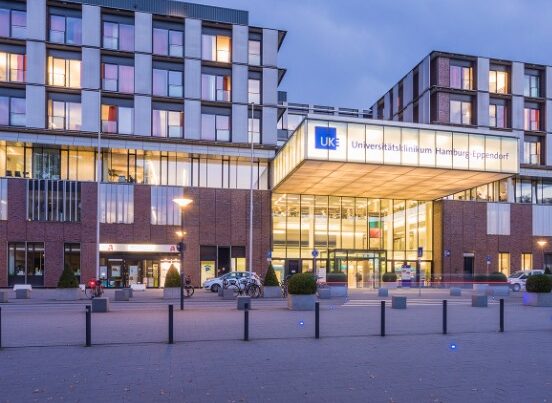
English can feel ubiquitous in Berlin (Image credit: Katharina Gensch)
Hanna Torsh: Welcome to the Language on the Move podcast, a channel on the New Books Network. My name is Hanna Torsh, and I’m a lecturer in linguistics at Macquarie University in Sydney, Australia. My guest today is Katharina Gensch. Katharina is a doctoral candidate in the Department of Vocational Education and Lifelong Learning in the Faculty of Education at Hamburg University in Germany, under the supervision of Associate Professor Claudia Kulmus.
Katharina’s research focus is on the language learning experiences of older adults, and the connections between learning English and the practices of aging.
Katharina has also worked as an English language teacher in Germany for 5 years, and has recently published an article in the Journal of Educational Gerontology, entitled, English Language Education for Older Adults in a Multilingual Urban Environment. Katharina, welcome to the show.
Katharina: Hey, Hanna, thank you so much for having me.
Hanna: I’m really excited about talking to you about this article. It’s a fantastic piece of work. So, let’s start by you telling us a little bit about yourself and how you got interested in the language learning experiences of older adults in Berlin.
Katharina: So, I have to go back to being a master’s student of American Studies at Leipzig University. That was when I decided to get my CELTA, that is the Cambridge Certificate in English Language Teaching to Adults. And shortly afterwards, I took over the English classes for older adults at a community center in Leipzig that a friend of mine had been teaching beforehand.
And yeah, that’s when I realized that I really enjoyed working with older adults, and at the same time still following my passion for language and also working with students who really appreciated these weekly classes and told me how much these classes meant to them. So, when I moved to Berlin after graduation, I looked into course providers here, and I took up Teaching English to Older Adults again as my first job after university here in Berlin.
And whenever I told anyone about my job, they would ask me, well, why would older people still bother to learn English? And can they even still learn a foreign language at their age? And who are these people taking your classes in the first place? And, well, I mean, I did have some ideas about this, but I really wanted to dive deeper into the topic, and I also had been thinking about doing a PhD. And so, some years after having moved on to another job, I decided to come back to the topic and to academia.
So yeah, now I’m a PhD student at the Faculty of Education in Hamburg, and as you said in my dissertation, I explored the reasons why older adults in Berlin take English classes, and how they make sense of the language learning specifically as older adults.
Hanna: Wonderful. I mean, I think it’s so interesting that you talked about getting that response from people. Can they even learn? I mean, I have to say, I had the same sort of, response when I was first fortunate enough to hear you and Claudia talk about this in Hamburg when I visited earlier this year, because it hadn’t really occurred to me that, of course, old adults are still learning, and of course, older adults are interested in learning new things, but we do have these sort of stereotypes as a society that, you know, this is not a group that can, yeah, that can still learn, and, or that are kind of the focus of educational research, educational theories, things like that.
So, I haven’t read very much apart from your work about older learners in the literature. So, let’s start, perhaps, by defining that term. I know when we first talked about this, I said, oh no, Katharina, is this me? Am I old? So, tell me, what do we mean by older? And then maybe you can tell me a little bit about why this is such a sort of missing aspect of the research, and what are the key issues when we’re thinking about older learners and, and learning languages?

English can feel ubiquitous in Berlin (Image credit: Katharina Gensch)
Katharina: So, generally, when we talk about how to define older, it really depends on whom you ask. Like, even if we just think about drawing a chronological line, we’ll get different answers depending on who you’re asking. This range will range from 35 years old when it comes to pregnancies, to 50 or 55 in labor market analysis to sometime in the 60s, which is the common legal retirement age in most countries, and really anything in between and beyond is a possible answer to what goes as older. And at the same time, aging is something that’s experienced so differently by everybody at different stages in their life. So, I would say it’s debatable in how far defining age by a number can be helpful in the first place. And so, I personally, from my research, have decided to go by whether the learners describe themselves as old or not. So, more concretely, I have focused on English classes and course providers that directly address older adults. So that, for example, means a class that is entitled English for Seniors, or English for Older Learners. So, I am assuming that anybody who attends these classes would identify as old, whatever that means to them personally.
And this is something also which I find interesting, this is something that providers themselves have been struggling with recently. How do you justify that you entitle a course as something specifically for seniors, something specifically for older people? As in, how far is that, or can that be perceived as stigmatizing also? Like, claiming that older adults need or get their own class? Why is that?
So, with public adult education centers, here in Germany, that’s mainly the Volkshochschulen, there has been a tendency to not use this type of address at all anymore. And this, again, of course, has influenced my sampling for my thesis, which does not include learners from the Volkshochschulen, but only from private class providers and also community centers.
Hanna: Right, interesting. So, the different institutions are actually marketing their courses. differently, in terms of whether they explicitly say they’re for seniors or not. Oh, that is super interesting. I have a gym that’s just opened up down the road from me that’s for 50 plus, and I suddenly realized in a few short years, I am eligible for it, and it says seniors! So, I think I can kind of see both sides. I can see why, they might not want to do that, as you say, because of stigmatisation, but I also see the value because, of course, it’s going to be very different a very different cohort, if people identify as seniors in terms of what they want out of the classes, potentially, although I guess that’s what that’s maybe what you can tell us about. So, what did you find? What did you find in those classes that you did examine that were marketed towards seniors, so that the participants identified themselves as older learners. What were your key findings about those learners?
Katharina: Well, especially regarding the direct address, that is something that I asked the people that I interviewed, and they really appreciated that direct address, because they were like, well, you know, that is, exactly what I’m looking for. I am, you know, I am starting learning English again after so-and-so many years of not taking English classes, and if a class is marketed directly for seniors, I expect that this will be the same, or at least a similar situation for the other students in the class as well, so I will not feel left out or left behind in my learning process. They just assume that people in their age group roughly will start from a similar point as they themselves, let’s say.
Hanna: So in a sense, it maybe, like, mediates against that stigmatization, because then they’re not potentially or they might feel like they’re not the only person in that room who is potentially not looking for English for work, or not looking for English for, you know, mobility, but actually looking at it for different reasons associated with being in that older age bracket. So, yeah, super interesting. And what did you find about the other sort of motivations that the participants had for doing English at that time in their life, which they identified as being kind of their senior years.
Katharina: Well, it’s a super wide range of topics. It ranges from things we might think of first, like, still going on vacation, and still going traveling, and finding English a useful language to have, to do this more independently. It is also about cultural reasons in the broadest sense, things like really enjoying English music, or English books, being a literature lover and wanting to read certain things in the original language.
But, one really important aspect is, for many of the people I talked to, was really that English has become so ubiquitous within the past years, especially compared to the time when they were, you know, students, adolescents, younger adults, and they feel like English really is a means to participate in the communication that is happening all around them all the time, and that makes them feel like they can still be a part of their urban environment where English has become so all over the place, really, especially in Berlin.
Hanna: So, tell me a bit about that. I’ve, I’ve not spent much time in Berlin, I’ve been a tourist there, and I’ve always loved it, but I, from reading your paper, I get the sense that there’s been this big change in terms of the presence of English in that environment.
Katharina: Yeah, so we really have to imagine that, as a person living in Berlin, and also as an older person living in Berlin, you encounter English in all aspects of your daily life, that maybe spoken interaction with non-German speakers, such as, you know, tourists asking for direction, but also staff at a restaurant or a store that will only speak English, to English as part of the linguistic landscape. So, when you look around and you look at all types of signs of ads, be it, you know, on storefronts or in public transport, all there will be English, like, so much of it will be in English.
Hanna: And that’s something that’s really changed for this group of participants over their lifetime?
Katharina: It would I mean, I just talked about not, doing a, you know, numerical age, but, just to give you a rough idea about the people I talk to, so the people I interviewed at the time of the interview were some were around the youngest one was 55, and the oldest one was 87 at the time I was talking to them. So yeah, obviously things used to be different, only several decades ago, even, and then with the specifics of German history, of course, and in Berlin, those people who grew up in the eastern part of Germany, or the eastern part of Berlin, the GDR, they would have not learned English back in school, but rather have learned Russian. So, this is an entire, like, a considerable part of older adults living in Berlin now that have not been in touch with English to the same degree as, we have.
Hanna: Yeah, that’s so interesting. Yeah, and, so for those learners, their exposure to English would have come about, not necessarily in school, but later on in life, and then through this growing, increase of English in the environment. Yeah, oh, that’s so fascinating. Actually, I have a colleague who studied German, and I remember him saying he went to a cafe in Berlin, and they said, no, no, English only, and he threw up his hands and said, why did I bother? There is this, sort of sense that maybe in some parts of Berlin, you don’t you can’t even use German. It has to be English.

Senior citizen learning English in Berlin (Image credit: © Ebba Dangschat, via VHS Berlin)
Katharina: Yeah, absolutely, and I mean, I think I didn’t even realize it, that it does work to this extent until I talked to, the people I interviewed for my thesis, that just how, how much it is. I mean, you can hear and see it in so many places, and people will just address you very casually in English without even stopping to ask if this is a language that is available to you.
And I mean, this can of course be challenging for people of all ages, even if we consider English proficiency to be higher in younger cohorts, that doesn’t mean that everybody is comfortable in English. But especially to older adults, this can be a, like, a daily and current source of irritation, which they then have to deal with, and I can only imagine what, you know, that all these little daily irritations that you’re meeting, what that sums up to, and what that means for feeling like you belong or don’t belong into that urban space of your home city anymore.
Hanna: Yeah, I mean, I think that’s a really pertinent, sort of finding about how you have these students that are, they’re learning English, but they also sort of articulate this resistance to the imposition of English in a space which they felt should be, in some way, you know, welcoming and inclusive to them as, you know, long-time nationals and residents. We had a similar sort of debate happen here in Australia around linguistic landscape with signage, and there was a suburb quite near where I live, actually, where a lot of the signage was multilingual. And the local government, tried to put up, some laws about the signage being required to have a certain amount in English, because there was this sort of, there were these voices in the community saying, we feel excluded by these multilingual signs, and that sort of imposition of other languages into a space that they felt needed to be, you know, familiar to them as those they as insiders. So, it’s so interesting to me that you had participants who felt like that but were still learning English, so they were still, you know, they were still doing the work of learning the language, but they still were able to kind of articulate this resistance to it.
Katharina: Yeah, absolutely. I mean, there’s people react super differently to, the use of English around them. You have those who are really embracing it, and to whom this use of English is a sign of a diverse and multicultural city, and they really enjoy being part of this. You also have those who they just acknowledge the fact that English has, you know, the use of English has increased, but they’re really, for them, no strong feelings involved at all. That’s to them just how things develop, how language use develops. And then, as you said, you have those who really reject that, and who also I’ve also people tell me that they experience it as a discriminatory and ageist practice that knowingly excludes older people, who do not know English very well from, public communication, really.
And yeah, as you said, I find it, I still find it so inspiring that, you know, regardless of your attitude of their attitude towards that use of English, every one of the people I talked to still chose to learn English in order to overcome these irritations, to find, you know, find their way, around, navigate this now-so-English urban environment of theirs.
Hanna: Yeah, it’s a really, I think it’s a really nice example of all of these different kinds of motivation for language learning that are often not black and white. You know, you can feel ambivalent while still being invested as a language learner. So, yeah, I think that’s it’s a really nice illustration of that.
I wanted to, to switch now to this question of English, because, of course, we’re not talking about any language, right? We’re talking about this, you know, this language that is, in lots of ways, a kind of an international language in many multilingual cities around the world that, you know, is not necessarily the language of any specific minority, but is in fact a lingua franca. So, you know, what can your study tell us about how, you know, language learning languages like English, or learning a language like English as a lingua franca is maybe becoming part of growing older for urban in urban environments, in not just in Berlin, but potentially also in spaces like, you know, around the world, like Berlin, where English is, you know, is so ubiquitous, as you say.
Katharina: Yeah, I really think it showcases how dominant a language English is. And, I mean, I was thinking about, because especially in Berlin, we have there’s many other languages that are very commonly spoken, and that you can also see and hear in the public space. I mean, Turkish, Arabic, and Russian, also Ukrainian, are the very big ones, but there’s still a lot of other languages that you will encounter on a daily basis. But they definitely do not have the same status attached to them as English does, so English is always connected to this, this idea of multiculturalism of, of cosmopolitanism.
Also, here, especially here in Berlin, you have this really artsy, vibe attached to English. The international artist scene, where most people speak English with each other all the time. And what’s interesting is that you know, when you think about it, it’s really striking how it seems to be perfectly acceptable for staff, to only speak English and not know German, while with languages spoken by more marginalized groups, even if they are spoken by large parts of the population, this would be considered a lack of integration or assimilation, whereas with English, nobody even seems to think into that direction.
I think I just verged away a little bit from your original question but I think on a more, meta level, what my study also tells us is, yes, English is becoming this lingua franca, and older people choose to learn English, to, you know, participate in communicational practices around them more completely, but on the one level above that, it’s also really telling about how do we even not think about English as a foreign language anymore? Whereas with other languages spoken, there’s still this stigma attached to it if they are spoken instead of German, whereas with English, that it’s just a completely different logic that seems to be at work there.
Hanna: that’s beautifully expressed. Yeah, I think that’s really exactly the issue, that it is, as a kind of learning object, it’s seen quite differently. It’s not about accessing a speech community as such, but it’s about accessing all of these other things that you’ve talked about cosmopolitanism, prestige. And it’s certainly there is research that shows that in other contexts, English is that, too. You know, English is, is wealth, English is status, so it’s much less about learning a language, as you said, that is spoken by a specific minority. It’s not about accessing people so much, it’s almost about adding to your human capital, in a, in a different way.
So yeah, I think that’s really relevant. One of the things that we say often in Language on the move is that it’s never about the language, it’s always about the speakers, right? And so, I think it’s a really good example of that, with this, that it’s not English, it’s actually about what being an English speaker means, what it counts for in interactions and in communication.
Alright, well, I mean, we could, we, yeah, I mean, we could talk about that, and I think there’s some really interesting research by my colleague Alex Gray about that in China as well, about the way that English is often valued ahead of learning other languages in the Chinese, nation-state. Because of its high value, and that’s certainly the case in lots of global contexts that we see, too.
Katharina: Maybe I can, add on to that, because what you just said is that English is about more than just learning a language, it’s also about, you know, all these other things that, become accessible, or you think become accessible when you learn it. With a slightly different, take on that, that’s also probably one of my one of the key findings that I learned from my research so far is that these older adults learning English, it’s about so much more than just them learning a foreign language, but it’s about them, as they grow older, still being able to navigate their environment independently. So, be that at home in Berlin, or on vacation. It’s about them not depending on the English skills of others, like, you know, their children or grandkids who have grown up with English.
So it is, after all, not only about learning a language, but it’s also about them shaping the current stage of their life, about shaping their age stage in a way that feels satisfying to them. That, to me also really shows how just in general, and with the bigger picture, thinking about and improving access to language learning for all adults is really something we need to consider when we think about how does a society where everybody can age well look like? So, we have to include that perspective in it, especially in multilingual spaces like, you know, Berlin, Sydney, whichever that might be.
Hanna: Yeah, yeah, oh, that’s really great. So, it’s about, also, for them, creating or retaining their agency. I really like that. That’s really interesting. It would be great to explore that in the Sydney context, too. I don’t think we know very much about that yet. So, that would be really interesting.
Okay, so, it’s such a great study, and I know that for our audience, it’s always interesting to hear about how studies are done, so maybe you could tell us a little bit about your methods. So how did you actually undertake this research, and do you have any tips for other graduate researchers about doing this sort of research from your own experience?
Katharina: Yes, absolutely. So generally, I decided to do interviews, qualitative interviews, quite early on, because especially having been a teacher myself, and having had the experience that these people have stories to tell, that not are that are not very often listened to by researchers. I really figured that qualitative interviews really leave the room and space for them to tell their own story that would be that would be my focus.
So, I reached out to several providers in Berlin who offer English classes for seniors. I have to say that among them were two providers that I used to teach classes at a couple years ago, which obviously, made access to them so much easier, because they immediately invited me to come into the classes, to stay during class, and then present my topic, and ask if somebody would be willing to do an interview with me. That was extremely helpful.
And yeah, so I did, problem-centered interviews, I did 23 of them all together. And as I said, I only included classes that explicitly address older adults in their course titles. And I predefined a set of questions to cover, so their reasons for taking English classes, for choosing the specific course that they were currently attending their impressions of their English class, their previous, current, and anticipated encounters with the English language, and then, quite broadly, interpretation of their current life phase.
And, because you asked me what would be my advice for fellow graduate students, what I found really, really helpful, and I would really encourage research to do, is to always leave enough room to create a interview space that encourages the respondents to really go into detail, to bring up alternative perspectives, to spontaneously share stories that they might not have thought of as related to language learning in the first place.
But yeah, I feel like this really has allowed me to get more of a complete picture of their experience. So, for example, there’s been this this one student who we were talking about her English learning experience, and if, you know, things might be different learning a language now that she’s older, then it might, you know, than her learning English back as a teenager was and this all of a sudden brought up her story of her grandmother learning English by herself at home with a book, and how, she only then remembered she’s like, oh my god, I never thought about this before, but we all made fun of her for trying to learn English.
And that led into her reflecting onto what is it that we as a society have as a view of all the people learning English, and what does it do to, now that I myself am a real person learning English? So it opened up this whole room for self-reflection, related to age and language learning that I was so happy that we had room in the space, and also the time, to have that and not, you know, stick to a predefined set of questions, and once that is answered, yes or no, you move on to the next question.
Hanna: Oh, that’s a wonderful story, yeah. Yeah, I have to say, as I get older, I’m having those moments more and more, where I’m realizing exactly that. It’s like, wait a minute, this person in my life was my age when this was happening, and this is how I saw them. So, what a wonderful realization, and to have that as part of your data. That’s fantastic. Yeah, thank you. I think that’s a really good, tip.
Certainly, I would endorse that also, and often you get even the best data when you’ve, pressed stop and the recording is over. It’s a bit like when the patient puts their hand on the door of the doctor’s surgery, is often when the doctor gets the most important information. So, I always encourage researchers to write down everything that was said that they thought was important after the recording device goes off, because often that’s when people do relax and start to really give you those fantastic stories like that one.
Katharina: Yeah, yeah, absolutely. I actually that is the very first postscript that I did, all contained that note to myself, leave recording device on until the very end.
Hanna: Yes, that’s also very important, yes.
Katharina: Yes, because that is, as you said, like, you know, you the interview might be over, and then while you’re already saying goodbye, and you’re already in the hallway, then they’re like, oh, you know what I just thought about. And yeah, I wish very often that I had still that on record.
Hanna: I mean, we, you know, we can take notes, that is also valuable. And I recently heard a presenter give a talk on data where the participants wouldn’t be recorded. They were very against it, but they were quite happy for him to take notes, so his entire project was actually just based on notetaking, so we can do that too. But yeah, yeah, absolutely. Oh, look, it’s just been so wonderful talking to you about this. I have one last question for you. So, now that you’ve published this article, which I understand is part of the PhD, so what’s next, in your research, and what’s next for you, perhaps, in other projects that you’re involved in?
Katharina: So, actually, it is, next up is zooming out of the article again, and connecting all the dots to write my thesis, because, while the you’re right that the article is part of my thesis, and that is it’s data for my thesis, this is, the article itself is not part of the, of the PhD, so I’m actually writing a monograph, and so after having zoomed in on the article, I have to zoom out again and trying to connect the dots of the bigger picture. Other than that, since June, I’ve also been part of a research project called Under Pressure, Literacy and Discrimination at the University of Hamburg, where I get to research older female migrants’ multilingual literacy practices in Hamburg. So, I am really excited to look at multilingualism and older adults from yet another perspective for that.
Hanna: Oh, that sounds really cool, I can’t wait to see what comes out of that project. Katharina, it’s been such a pleasure talking to you about your fantastic research. Thank you so much for joining us, and I can’t wait to see what happens next.
Thanks everyone also for listening. If you enjoyed this show, please subscribe to our channel, leave a 5-star review on your podcast app of choice, and recommend the Language on the Move podcast and our partner, The New Books Network, to your students, colleagues, and friends. Thanks, Katharina.
Katharina: Thank you so much, Hanna.
Hanna: It was lovely to have you. Thanks everyone, and until next time.


 This work is licensed under a
This podcast episode from Language on the Move really broadened my understanding of language learning among older adults in multilingual cities like Berlin. The guest researcher Katharina Gensch shared her interview-based study on elderly learners, and her ideas are both eye-opening and thought-provoking.
I used to hold the common stereotype that older people have little motivation or ability to learn a new language. However, this podcast completely changed my view. The older adults in Berlin learn English for many practical and emotional reasons: traveling abroad, enjoying English music and books, and most importantly, adapting to the widespread use of English in daily urban life. English has become everywhere in Berlin’s street signs, shops and public communication, leaving many seniors feeling excluded if they cannot understand it. What impresses me most is their mixed attitudes toward the rising use of English. Some embrace it as a symbol of cultural diversity, while others see it as ageist and unfair. Even so, they still choose to learn English to keep their independence and sense of belonging in the city.
Besides the research findings, I also learned a lot about qualitative research methods. Katharina’s advice on leaving free space in interviews to listen to participants’ real-life stories is very valuable for language learners and future academic study.
Overall, this podcast makes me realize that language learning is never limited to young people. For older adults, learning English is not just picking up a language, but a way to engage with society and maintain self-worth. It also reminds me to view multilingualism and language education from a more inclusive and respectful perspective.
Thanks, Keyi Xie, for sharing your perspective! Good to know you found the podcast so useful 🙂