
In this episode of the Language on the Move Podcast, Brynn Quick speaks with Dr. Leah Karliner. Dr. Karliner is Professor in Residence in the Division of General Internal Medicine, Department of Medicine at the University of California, San Francisco in the United States. She is Director of the Center for Aging in Diverse Communities and Director of the Multiethnic Health Equity Research Center. She is both a practicing general internist and a health services researcher, with expertise in practice-based and communication research. An important aspect of her scholarly work centres on improving quality of care for patients with limited English proficiency, and the goal of her research agenda is aimed at achieving health equity through improved communication and clinical outcomes.
In this episode, Brynn and Leah discuss a 2024 paper that Leah co-authored entitled “Language Access Systems Improvement initiative: impact on professional interpreter utilisation, a natural experiment”. The paper details a study that investigated two ways of improving the quality of clinical care for limited English proficiency (LEP) patients in English-dominant healthcare contexts, by:
- Certifying bilingual clinicians to use their non-English language skills directly with patients; and
- Simultaneously increasing easy access to professional interpreters by instituting on-demand remote video interpretation.
Brynn and Leah talk about the results of this study and what they mean for improved communication with LEP patients in healthcare.
If you liked this episode, be sure to say hello to Brynn and Language on the Move on Bluesky! Also support us by subscribing to the Language on the Move Podcast on your podcast app of choice, leaving a 5-star review, and recommending the Language on the Move Podcast and our partner the New Books Network to your students, colleagues, and friends.

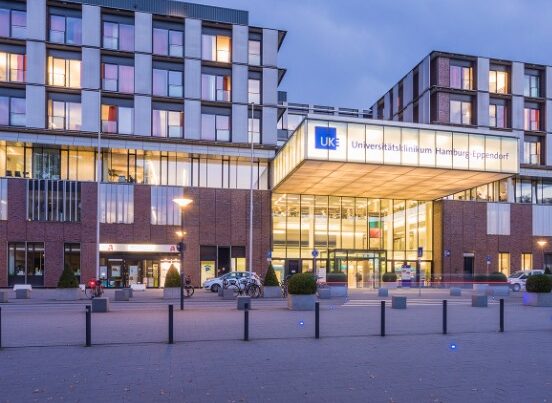
The Multiethnic Health Equity Research Center is based at UCSF (Image credit: UCSF)
References
A discussion about the terms “limited English proficiency” (LEP) and “non-English language preference” (NELP) in healthcare, which is also laid out nicely in Ortega et al.’s (2021) Rethinking the Term “Limited English Proficiency” to Improve Language-Appropriate Healthcare for All
Leung et al.’s (2025) paper entitled Partial language concordance in primary care communication: What is lost, what is gained, and how to optimize
And for more Language on the Move resources about the intersection between language and healthcare:
- Reducing Barriers to Language Assistance in Hospital
- Language policy at an abortion clinic
- Mismatched public health communication costs lives in Pakistan
- Why it’s important to use Indigenous languages in health communication
- Linguistic diversity in a time of crisis: Language challenges of the COVID-19 pandemic



 This work is licensed under a
Greetings from Manila! I am very impressed by the discussion about improving the quality of care for patients with LEP. More specifically, I find the concept of “ad hoc interpreters” quite compelling. The idea that patients would seek language assistance from their relatives or close friends made me realize how common that occurrence may be in our country. Not to mention, there are many foreign doctors practicing in our local hospitals. It makes me ponder what their exchanges might look like. Thank you for the engaging episode.
Thank you, Mikhail! Yes, absolutely, using ad hoc interpreters is quite common in healthcare all around the world (for many, oftentimes complex, reasons). These aren’t even always a patient’s family members (though this is the most usual type), but can also be multilingual healthcare staff members and even nearby security guards, taxi drivers, or other patients themselves. Thanks for listening!
As a child of a physician, I have observed that almost all of my father’s patients, especially the elderly, brought family members along with them and, while true that patients might be bringing them for support and advocacy rather than interpreting purposes, these family members of theirs are put in a position where they cannot refuse to do so, especially if they are more proficient in English. My father is bilingual, but we live in the province where there are other dialects he is not familiar with, and this is where I see a professional interpreter coming in handy. The episode also discussed easy access to professional interpreters by instituting on-demand remote video interpretation, but I have concerns about this, as there are still hospitals in my province with areas considered as weak spots in terms of Wi-Fi connectivity. In cases such as this, is the only solution of having a professional interpreter being one that is physically present?
Absolutely, Fatima! I think it’s really important to give those family members the option of a professional interpreter so that they don’t feel like they HAVE to interpret and can just focus on care-giving. And yes, the issue of reliable wifi connection can be a big barrier with video interpreters. Phone interpreters do exist, but it can often be difficult for the interpreter to hear the doctor/patient and for the doctor/patient to hear the interpreter. In this case it’s, of course, ideal to have an in-person interpreter wherever possible, but I know that isn’t always feasible. This is why I think hospitals and other healthcare sites need to be more proactive (rather than reactive) and anticipate these potential barriers to interpreters so that solutions can be thought of ahead of time instead of in the moment.
Great episode! When a person’s health and wellbeing is being talked about, patient-doctor communication is one of the most important things to be focusing on as it (in my opinion,) serves as the foundation of effective healthcare. I find the study and discussion very insightful and do find the importance of finding solutions to make things better and clearer for LEP patients to create a community with clear communication.
Thanks so much for listening, Maria!
What stood out to me in this podcast was the fact that an actual physician is speaking on this topic. It was interesting to learn about such issues from someone who works in the medical field as a doctor! I personally found this podcast insightful and important due to the fact that hospital visits and medical-related interactions can be the most vulnerable a person could be. It is important to make sure that all patients feel safe and understood despite language barriers. Healthcare really shouldn’t be hindered by language proficiency and language differences.
I agree, Simoune! Hearing from actual physicians on this topic is so important. I firmly believe that we need to be talking to the on-the-ground frontline healthcare workers to create systems and procedures that help them as much as LEP patients.
What resonated most with me in this episode was a meaningful conversation about how medical care is not only about treating a patient’s physical condition, but also about making them feel heard and understood. When patients facing health crises cannot communicate in their primary language, the stress extends far beyond physical symptoms. It creates profound emotional isolation. The conversation made me realize how frightening it can be to be in a vulnerable situation while struggling to explain what you feel or understand what is happening. Utilizing professional interpreters and supporting certified bilingual healthcare providers is not just about administrative compliance; it is about providing psychological safety and equitable care. This podcast serves as a powerful call to action for health systems to recognize linguistic support as a vital component of holistic patient well-being.
Thank you, Cassey! Absolutely, feeling psychologically and emotionally safe is SUCH an important component of healthcare.
I really see this podcast as showing the realities of healthcare practitioners, especially when Leah emphasized how family involvement can be crucial, so I want to highlight what Brynn Quick said about how Leah combines the practical side of primary care with research, since it’s vital for a practitioner to know each patient’s history to shape the right approach. For a healthcare practitioner, that history isn’t just a detail; it’s the foundation for building understanding between doctor and patient. This becomes even more important for patients with less English proficiency in English‑dominated healthcare settings, where language barriers can easily disrupt care. Also, in some cases, a patient may have a family member in healthcare who can easily interpret the terms used in the doctor’s diagnosis. It shows that lean practice is about making healthcare responsive, empathetic, and inclusive.
Listening to this podcast made me realize more how difficult it can be for a patient to explain their symptoms or understand medical instructions from their doctors when they are not comfortable with the language being used. As someone related to a doctor (my cousin), I can relate to how we may understand each other’s language and regional language better than English. I was particularly interested in the discussion about professional interpreters because even a small misunderstanding in a medical conversation/consultation could lead to confusion, which might affect the patient’s treatment (even mispronouncing a word could be interpreted as a different meaning). This made me reflect that healthcare workers should be patient, understanding, and willing to use appropriate language support, such as interpreters, rather than assuming that every patient understands English well. The podcast also taught me that respecting a patient’s language is a way of respecting them and providing better, more equal healthcare.
Such a great listening experience! I admire that the podcast acknowledges that it is a bigger issue than language itself, but with communicating critical information and findings under high-stress, emotional conditions. And it is quite interesting to note that even among native English speakers, communicating clinical jargon can still be a tough job. Delivering such news to patients can range from relieving to daunting. Which makes me think even more about what it is like for LEP patients; it is not just jargon they are breaking through, but differing levels of language barriers. Framing it in these circumstances underscores why the intervention of a professional interpreter can be highly beneficial, making the situation easier and more efficient for all parties involved. Thank you to Brynn Quick and Dr. Leah Karliner for sharing such an important discourse! I would sure recommend this to my peers.
Thank you, Brent! Absolutely, the potential for high-stakes and emotionally charged situations in healthcare makes language support so incredibly important.
At first glance, linguistics and healthcare seem like they are way too far from each other. Yes, they are different fields, but when I listened to Dr. Leah Karliner’s discussion, I realized that linguistics is obviously a different field, but it can be applied to all. That is why there is such a subfield of applied linguistics. Given that medical professionals should provide quality healthcare services, they should also ensure they answer patients’ questions during consultations, as patients have the right to be informed. In cases where the patient and medical professional speak the same language, the patient can further clarify information, given that medical jargon is used exclusively within the field. It is much more challenging if they speak a different language, which creates a barrier. Personally, I have learned a lot of insights from this podcast, and I appreciate the effort to tackle this topic, which is usually not discussed, even though such issues exist in the medical field. I truly believe that this kind of effort will help overcome language barriers and improve services for patients.
Thank you so much for listening, Christian! I’m glad the applied linguistics sub-field of linguistics feels applicable to you here 😀
I’m not fully sold on replacing “limited English proficiency” with “non-English language preference.” The episode itself says this is not just preference in the casual sense. For some patients, another language is necessary for them to understand their care. So while PREFERENCE avoids the deficit framing of LIMITED, I wonder if it also makes a communicative need sound more optional that it actually is. That feels like a strange trade-off.
The episode gives enough room for the terminology to be questioned from inside the conversation itself. The fact that “preference” can sound both more respectful and somehow less urgent is exactly the kind of tension that made me keep thinking after it ended 🙂
I agree! I tend to use LEP (limited English proficiency) in my work to highlight that difference. However, I can also see how someone could be considered “proficient” in English but still really prefer to use a different language in which they are more comfortable for healthcare because of the complex nature of healthcare communication. Glad the episode made you keep thinking after it ended 🙂
This meaningful episode illustrates the real purpose of communication, specifically in healthcare. Language is not used merely to provide necessary treatment; rather, it is used to communicate and to help patients feel emotionally safe and healthy. As featured on the podcast, patients with limited English proficiency illustrate how a language barrier can significantly affect access to quality healthcare. When communication is unclear, crucial medical information may be lost. This podcast enlightens viewers that effective healthcare shall include support heard from providers to lighten the weight of their difficulties.
Absolutely, emotional connection and a feeling of safety through language is a really underdiscussed part of healthcare!
The talk or conversation between Brynn QUick and Dr. Leah Karliner about the 2024 paper entitled, “Language Access Systems Improvement initiative: impact on professional interpreter utilisation, a natural experiment” was very insightful! It’s refreshing to know that there are two ways of improving the quality of clinical care for limited English proficiency in an English-dominant healthcare context that have been investigated. One thing that made me realize about interpreters in the healthcare setting is that it is not an easy task, as it requires qualifications, a skill set, and the confidentiality of information to serve patients and others through accessible communication and interpretation. Additionally, it amazes me that there are certified bilingual clinicians, and I am sure that direct communication with patients and persons is smooth and reassuring. Access to language proficiency has become the ‘norm’ but it is true that it is not perfect; great podcast!
Thanks for that important insight, Kathleen! Absolutely, being able to interpret in healthcare contexts is a huge skill set that requires a lot of training, and it’s so important that we recognize that skill.
Indeed, listening to this podcast reminded me of the thesis topics I had in mind prior to my senior year as an English Language Studies student. I do believe the healthcare sector is one of the most important yet underexplored areas of linguistics because it not only undermines the quality of care but also hinders effective communication when necessary measures are not taken to accommodate its multilingual landscape. Hence, Dr. Leah Karliner’s discussion on certifying multilingual healthcare professionals and even talking about various interpretation methods made me realize that there is a primary solution, and in that way, we should be able to prioritize them in order to deliver the quality care patients need from all walks of life, and from all types of communities. This bridges the gap between communication and medical literacy since, at the very beginning, healthcare is often communicated at a standardized English-level lexical terms. In the end, this was an insightful podcast that I would like to apply in my local healthcare settings.
Thank you, Shannen! It’s pretty amazing to consider how English-dominant so much of healthcare (worldwide) is, isn’t it?
This was an insightful listen! I personally would like to commend how this podcast highlights family members as “interpreters” as a difficult situation to address. We may have noticed that, in some cases, medical consultations can manifest a heavy atmosphere, especially if the conditions being discussed are quite severe. These could negatively affects family members, too, and their emotional and mental weights may be overbearing that the responsibility to interpret can be challenging to fulfill. The existence of an interpreter, whether in person or not, allows the patient and their family to digest and process the information properly, ensuring that communication from both parties are smooth sailing and clear. This scenario is just one of the many probabilities that truly solidifies how professional interpreters are so significant in the field of healthcare.
Thank you, Marvin! I agree that it’s important to consider the potential burden of family members being asked to interpret in healthcare situations.