
Having worked at the University of Kurdistan Hewler since 2011, I have noticed how symbols of Kurdish nationhood are increasingly reproduced on campus. In this post, I will therefore explore how Kurdish nationalism is expressed through visual objects and institutional events to discuss what Billig (1995) describes as “banal nationalism”. This term refers to everyday nationalism, which often functions as a hidden curriculum in educational institutions with the purpose of infiltrating everyday life to build a national identity.
To explore this, I will first take you for a walk around three buildings on our main campus to observe the symbolic representations of Kurdish nationhood, and then I will finish in the garden to discuss how national identity is reproduced through institutional events.
A diverse university
The University of Kurdistan Hewler is an English medium institution located in the autonomous Kurdistan Region in the north of Iraq. The university hosts a multicultural and multilingual body of staff and students including refugees from especially Syria and internally displaced people from the south of Iraq. Most of the students are Kurds, but also Arabs, Chaldeans, Assyrians, Yezidis, Turkmen, and other ethnic groups are represented.
Flagging Kurdish nationalism
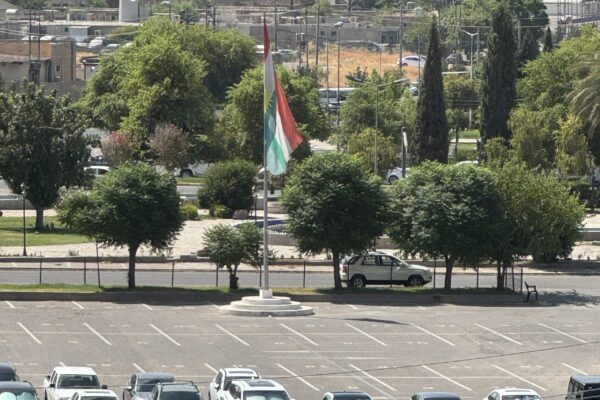
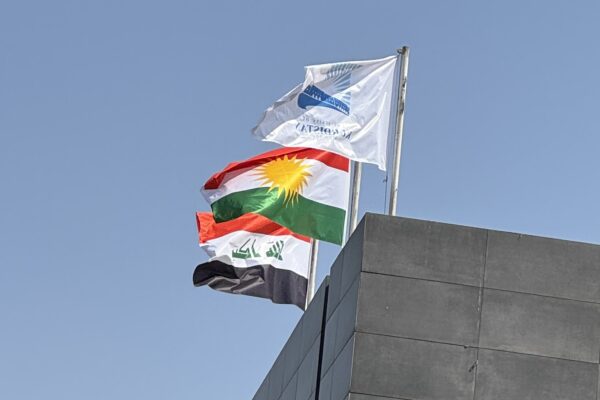
Each morning when arriving to the campus car park, I notice three different flags (Figure 1). In the car park, there is a tall flagpole with a huge Kurdish flag that was set up this year. On top of the university building is the university flag, the Kurdish flag, and the Iraqi flag. Having both the Kurdish and Iraqi flag on top of public buildings is mandatory procedure for all public buildings in the Kurdistan Region.
Kurdish clothes
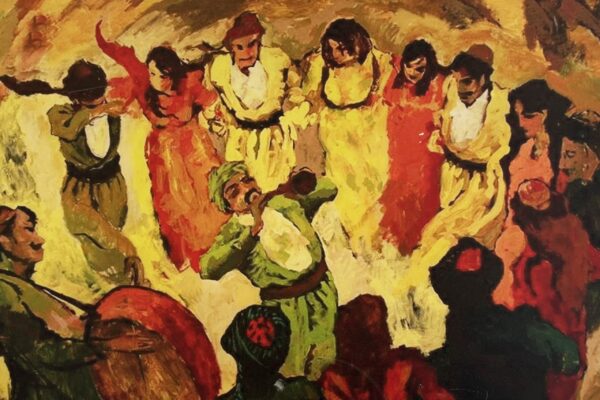
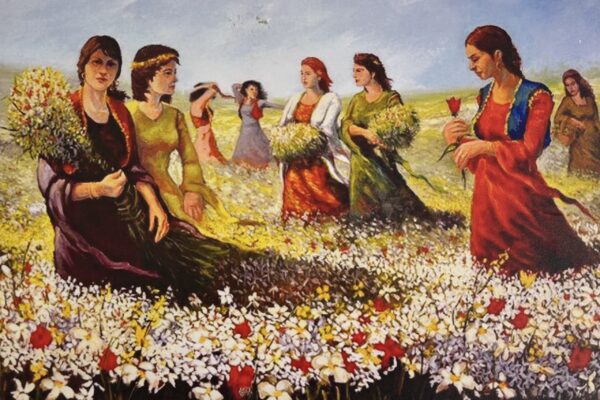
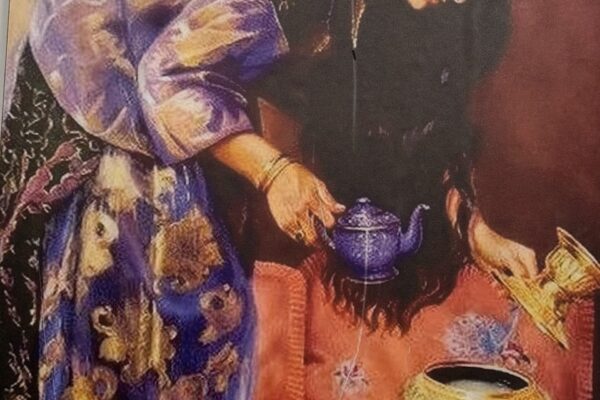
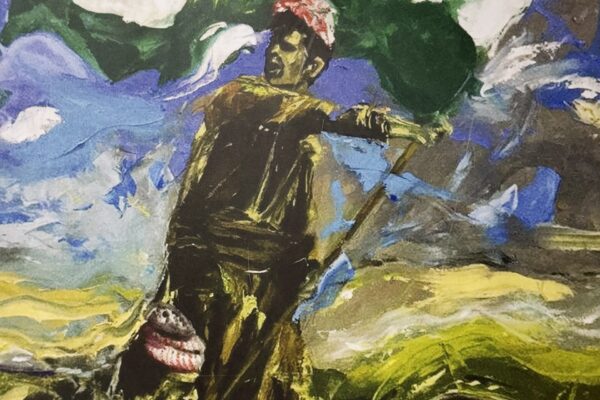
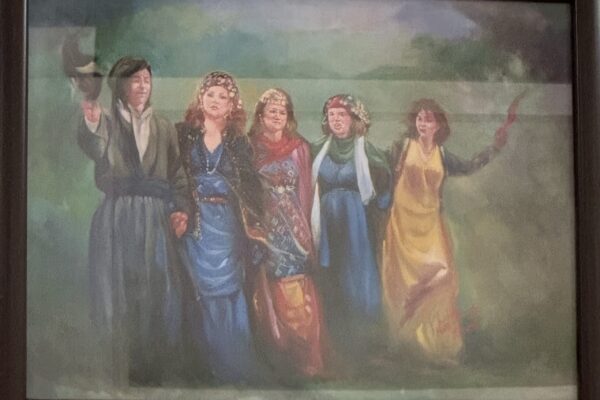
From the car park, I walk into the reception to the sound of multilingual greetings in Sorani Kurdish بەیانی باش (Beyani bash), Arabic السلام عليكم (As-salāmu ʿalaykum) and English (Good morning). In this space, I notice several art prints of people in traditional Kurdish clothes such as a woman preparing tea, a man holding a big Kurdish flag, women plucking flowers and people dancing Kurdish chain dance (Figure 2).
LOVE for Kurdistan
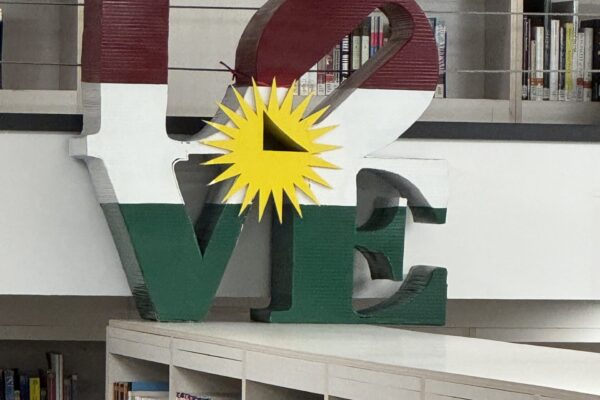
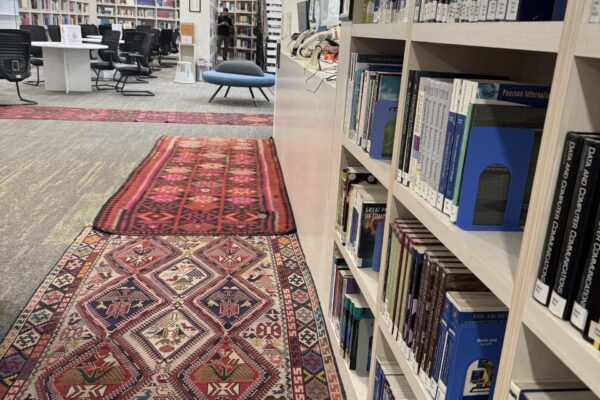
From the reception, there is a short walk to the library, which is specialised in research about Kurdistan. Kurdish carpets decorate the floors, and a big 3D letter installation in the centre of the library says ‘LOVE’ in the colours of the Kurdish flag with a yellow sun in the middle (Figure 3). Around the library, other objects symbolise Kurdish nationalism in the form of a Kurdish flag by the entrance and behind the check-out counter, there is a traditional art print of people in traditional clothes dancing Kurdish chain dance shoulder to shoulder.
National symbols in the classroom corridors
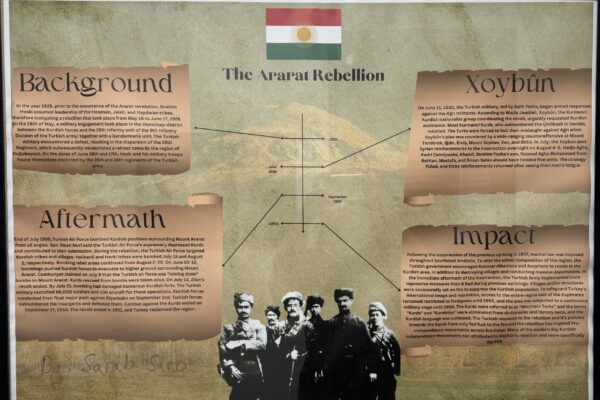
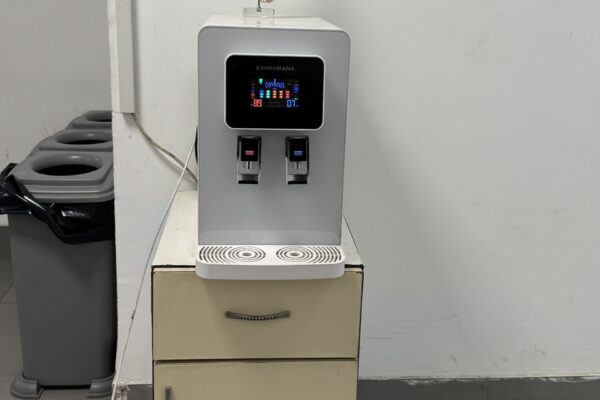
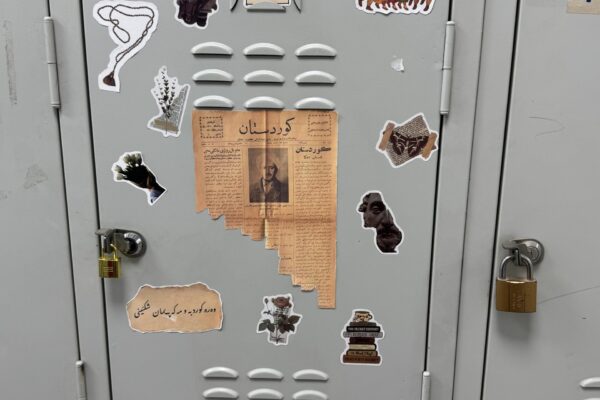
Leaving the library, I go to the academic building where national symbols are expressed in various ways in the corridors (Figure 4). On each floor, lockers are decorated with stickers of Kurdish flags, writing in Kurdish, pictures of historical figures and people dancing Kurdish dance. Kurdish flags or Kurdish leaders or historical events also appear on framed student-authored research posters, and a single Kurdish flag is placed on top of a water cooler.
Sticky objects in diverse university spaces
The visual objects I have presented from around campus all represent Kurdish nationhood and can illustrate Billig’s concept of everyday nationalism as students and staff silently are in daily contact with these symbols. However, in a multicultural context, national symbols have different meanings to different people. Based on Ahmed’s (2014) term ‘sticky objects’, Hopkyns (2025) explains that some objects are attached to different emotions, and that these emotions can lead to feelings of being included or excluded.
The association to Kurdish nationalism and national pride might be the emotions that are stuck for the Kurdish staff and students. However, non-Kurds likely feel differently about these objects. For example, some Kurds openly express a strong dislike for the Iraqi flag due to historical conflicts between the Kurds in the north of Iraq and the Arabs in the South.
Every Tuesday is ‘Kurdish Tuesday’
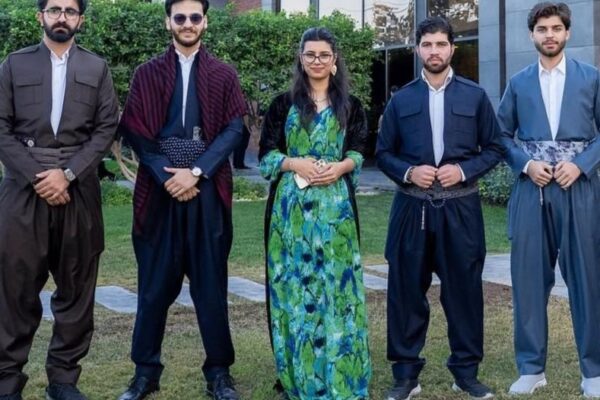
Repeated institutional rituals can also function as a form of everyday nationalism. Every Tuesday on campus is informally referred to as ‘Kurdish Tuesday’ where staff and students are encouraged to wear Kurdish clothes. Wearing Kurdish clothes on Tuesdays is highly encouraged by the university both via direct emails to staff and students and social media posts and illustrates a clear institutional interest in reproducing Kurdish nationalism on campus.
Kurdish rugs in the garden
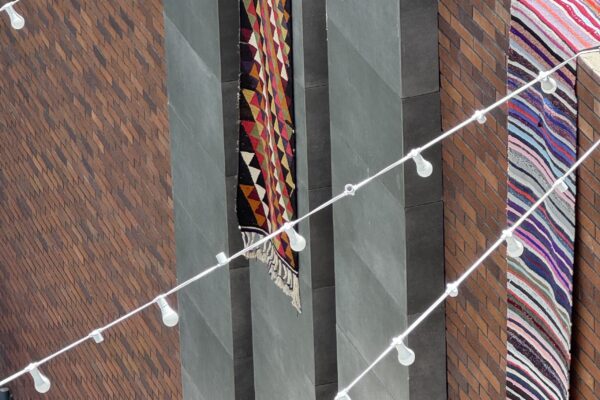
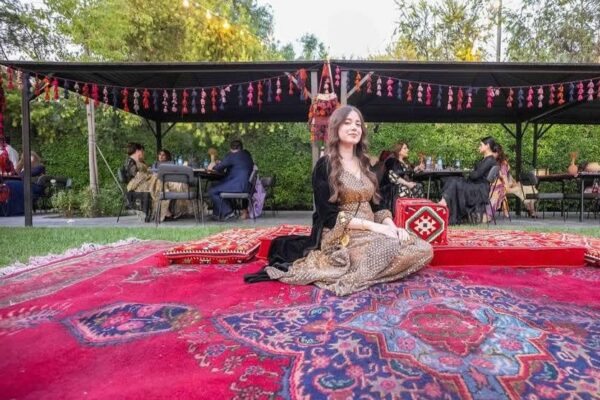
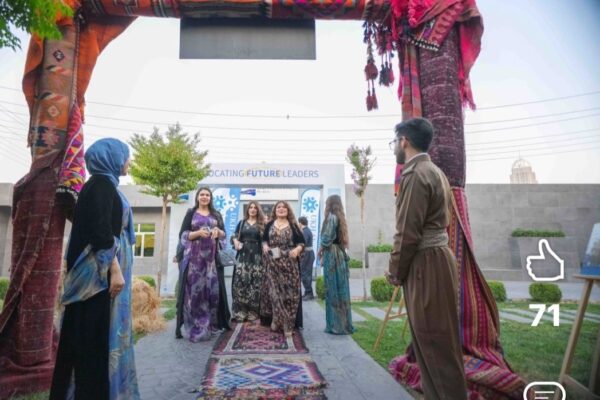
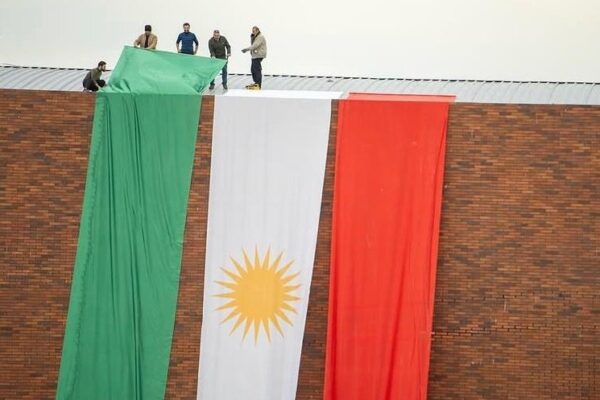
Where ‘Kurdish Tuesday’ takes place all over campus, other university events such as Alumni Day and Convocation Day are held in the garden with rugs on the walls and grass in traditional Kurdish colours.
Institutionalising national remembrance days
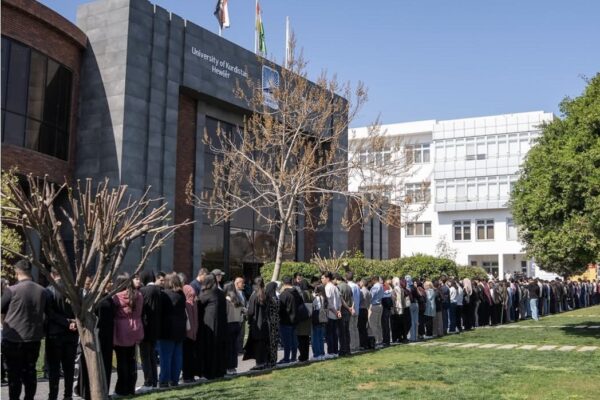
Other regional events are also celebrated on campus. Events like Kurdish Flag Day and Halabja Day are examples of how the university institutionalises Kurdish cultural and remembrance days (Figure 7). Halabja Day, for example, takes place 16 March at 11 AM where all staff and students line up in the garden and stay silent for 2 minutes to remember the estimated 5,000 victims of the chemical attacks on the Kurdish village Halabja in 1988. Other regional events like Kurdish Clothes Day and Uprising Day are also celebrated at the university.
Changing university spaces
After more than 15 years at the University of Kurdistan Hewler, I have noticed how the university spaces are constantly changing. Abstract paintings from the reception and the “English Only” sign in the garden have been removed, and we are in a new era where symbols of Kurdish nationalism are becoming more visible. This reproduction of Kurdish nationalism is reflected both through visual objects and events.
In a multicultural context like the University of Kurdistan Hewler, this non-human to human intercultural communication raises the question about students and staff’s feelings of belonging or exclusion on campus and calls for a reflection on non-human to human intercultural communication in educational institutions to balance the wish to contribute to a Kurdish national identity in a (post-)conflict society, and the need to ensure that everyone feels represented on campus.
References
Hopkyns, S. (2025). The complexities of ‘sticky objects’ and ‘happy objects’ in multilingual universities: emotional (un)belonging from a posthumanist perspective. Journal of Multilingual and Multicultural Development. Doi: 10.1080/014344632.2025.2554289.
Hopkyns, S. (2026). Decoloniality in Multilingual University Spaces. Cambridge University Press.
Ahmed, S. (2014). The Cultural Politics of Emotion (2nd ed.). Routledge.
Billig, M. (1995). Banal nationalism. Sage Publications.
Related content
- More on banal nationalism
- More on higher education

 This work is licensed under a